
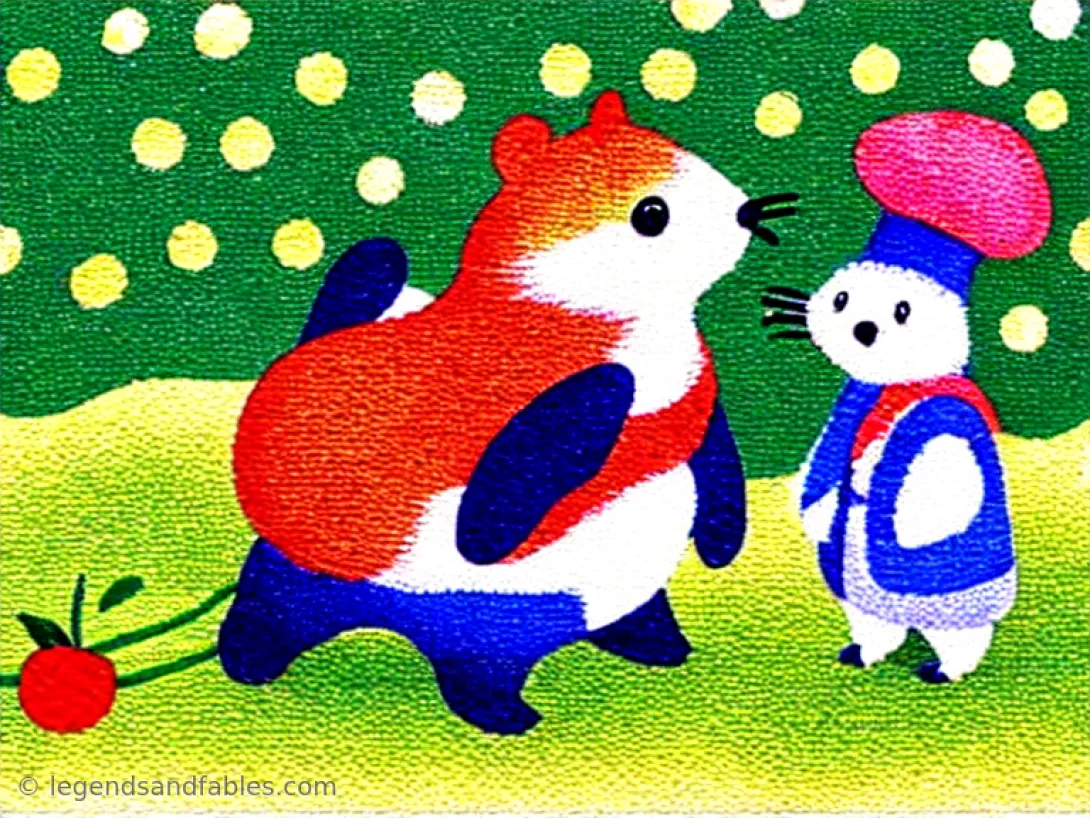
In a small village nestled in the rolling hills of rural Japan, there lived a mischievous tanuki named Kaito. Kaitu was known for playing tricks on his friends and family, but he never meant to cause any real harm. One day, while wandering through the village market, Kaito stumbled upon a tiny tofu shop run by an elderly woman named Otoyo.
Otoyo was a kind soul who took great pride in her tofu-making skills. She spent hours every morning carefully preparing the soybeans and selling them to the villagers at a reasonable price. Kaito, being a curious tanuki, decided to visit Otoyo's shop every day, trying out different types of tofu and offering his critiques. Otoyo would laugh and smile, happy to have someone appreciate her hard work.
Kaito became so fond of Otoyo's tofu that he began to sneak into the shop at night, stealing huge blocks of it to enjoy under the light of the full moon. But one evening, as Kaito was sneaking out with a particularly large block of extra-soft tofu, he tripped on the doorstep and accidentally dropped the entire batch onto the floor.
The next morning, Otoyo opened her shop to find that all of her tofu had been ruined by some mischievous creature. She couldn't understand who could have done such a thing and was about to give up hope when Kaito appeared at her doorstep, his face sheepish with guilt.
Otoyo looked at Kaito's guilty expression and burst out laughing. "You little tanuki!" she exclaimed. "I should have known it was you! But tell me, why did you take all of my tofu?"
Kaito hung his head in shame, but then a sly grin spread across his face. "Well, Otoyo-san," he said, "I just wanted to taste your delicious tofu under the full moon. And I must say, it was worth getting into trouble for!"
Otoyo chuckled and patted Kaito on the back. "You may be a troublesome tanuki, but you're also a good friend. Come visit me every day, but next time, ask before taking my tofu!" From that day on, Kaito became Otoyo's official taste-tester and helped her come up with new recipes for the most delicious tofu in all of Japan.
The villagers learned to laugh at Kaito's antics, knowing that his mischievous ways were always meant in good fun. And as for Kaito, he learned that sometimes it's better to ask before taking things that don't belong to him – but also that sharing in the joy of others' creations can bring even more happiness than just enjoying them alone under the full moon.
💡 Life's Lesson from this story
Helping others is its own reward, and kindness comes back to you.
🗺️ Cultural Context
📚 Word of the Story
- tanuki — a type of Japanese raccoon dog
- sakura — cherry blossoms that bloom in the spring
- yutoreore — a phrase used to express joy or triumph, similar to "hurray"
💬 Let's Talk About It
What clever idea did the tanuki have to get the tofu shop owner's attention, and why was it effective?
Do you think the tanuki would have been happy if he had kept the tofu for himself, or was honesty more important in this situation?
How do you think the tanuki felt when he received a reward from the shop owner, and what does this say about the importance of gratitude?