
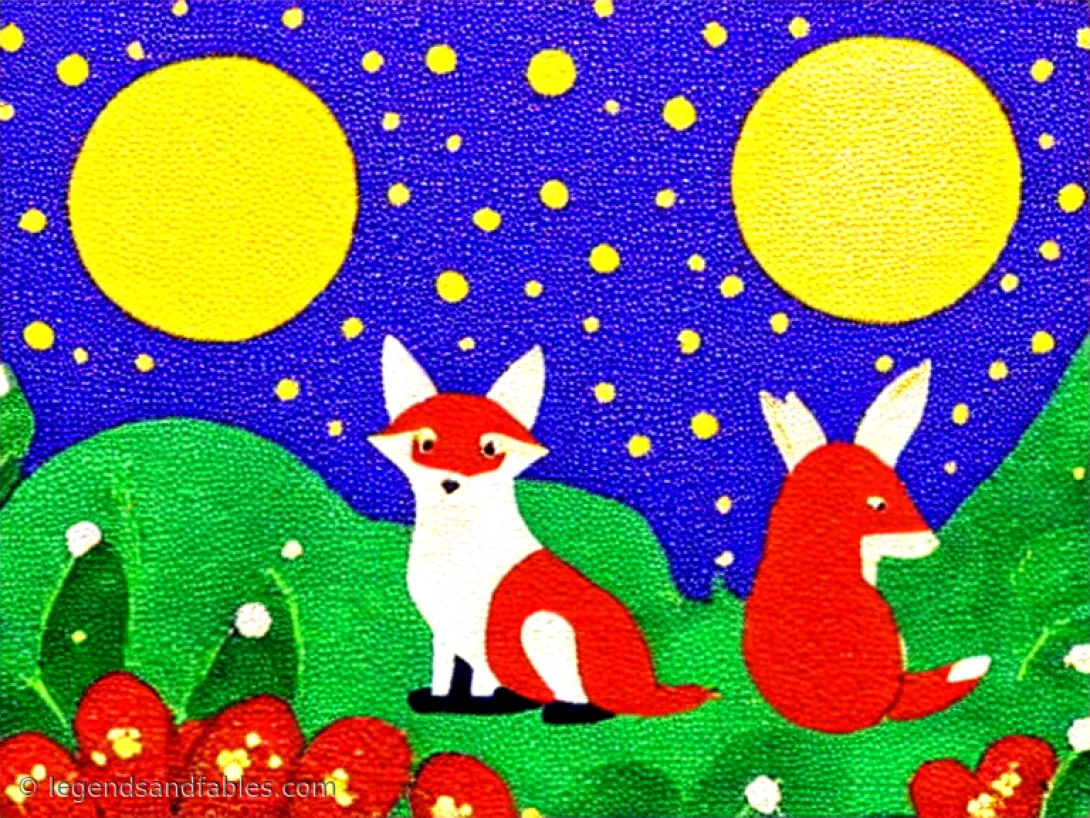
In the land of Asgard, where the gods and goddesses lived in golden halls, Loki was known for his mischievous ways. He loved to play tricks on the other gods and laugh at their foolishness. But one day, Loki's pranks went too far.
As the sun, Sol, rose high in the sky, she smiled brightly upon the land. The moon, Máni, followed closely behind, shining softly with her gentle light. But Loki thought it would be great fun to switch their roles. He snuck into the stables where the sun's chariot was kept and replaced the horses that pulled Sol's chariot with a pair of dull, lazy oxen.
The next morning, Sol climbed aboard her chariot, unaware of the trick that had been played on her. As she rode through the sky, she felt sluggish and slow, unable to shine as brightly as usual. Máni followed closely behind, but even his gentle light seemed dull compared to Sol's former radiance. The other gods and goddesses looked up in confusion at the strange sight.
Loki laughed with glee as he watched from a distance. But his joy was short-lived, for soon the mortals began to complain about the dull sun and moon. The earth grew cold and dark, and crops began to wither. Even the gods themselves felt a chill run down their spines. They realized that Loki's prank had gone too far.
In desperation, Sol and Máni turned to the great god Odin for help. He listened carefully to their tale and then called upon the wise goddess Frigga to weave a spell of reversal. With her magic loom, she spun a thread of light and wove it into the fabric of the sky. Slowly but surely, Sol's chariot was transformed back to its former glory, and Máni's light shone bright once more.
As the sun and moon regained their proper places in the sky, Loki slunk away, his tail between his legs. He learned a valuable lesson that day: that even the smallest of pranks can have far-reaching consequences, and that sometimes it is better to use one's wit for good rather than mischief. From then on, Loki was more careful with his tricks, but still he never lost his love for the art of cleverness.
💡 Life's Lesson from this story
"Power and wisdom come from within, not from tricks or deceit."
🗺️ Cultural Context
📚 Word of the Story
- Nebula — a cloud of gas in space
- Celestial — relating to the sky and stars
- Enchantress — a woman with magical powers
💬 Let's Talk About It
What qualities did Loki use to outsmart the Sun and Moon, and how can we be clever like him in our own lives?
Was Loki's tricking of the Sun and Moon a brave or cowardly thing to do, and what does this say about his character?
Do you think Loki would have been happier if he had found a way to share power with the Sun and Moon instead of trying to trick them?